Bathroom Wall Panels vs Tiles: Which One Actually Survives a Family Bathroom?

You're standing in a bathroom that hasn't been touched since the previous owners, working out whether you can get away with not paying a tiler. Somewhere in the research you hit wall panels, and then you hit a wall of people online insisting they look cheap and dent if you breathe near them.
Wall panels beat tiles on fitting speed, maintenance and DIY-ability. Tiles beat panels on the range of finishes available and on how the room reads to a buyer. But the argument most people are actually having isn't panels versus tiles at all. It's solid-core panels versus cheap hollow cladding, and those are two very different products.
Sort that out first and the rest of the decision gets a lot simpler. Here's the comparison with real numbers on both sides.
Quick Takeaways
- Tiled walls cost around £110 per m² once you include tiles, adhesive, grout and a tiler's labour.
- Wall panels start at £22.38 per m² in materials, and most people fit them themselves.
- Tiling a bathroom takes a professional three to four days. Panelling is usually a weekend.
- Grout is the part that fails. Regrouting a bathroom averages £380 and it's a job that comes back.
- The dented, flimsy panels people complain about are almost always hollow ribbed cladding, not solid-core panels.
What Is the Difference Between Wall Panels and Tiles?
Tiles are small individual pieces bonded to a wall with porous grout between them. Wall panels are large sheets that lock together with sealed joints and no grout at all. The complication is that "wall panel" covers two products that behave nothing like each other.
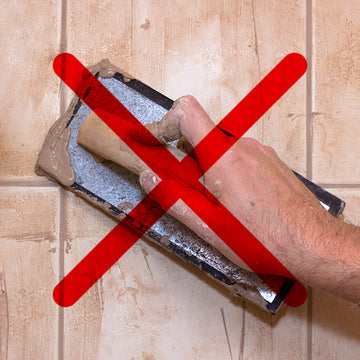
A tiled wall isn't actually waterproof. The tile is, but the grout between it's porous, and behind that sits whatever board the tiler used. In a properly built shower, the waterproofing is a tanking membrane you never see. Grout is a filler, not a seal, which is why it discolours and why it eventually needs replacing.
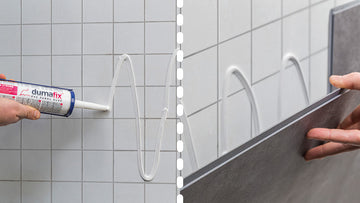
Panels remove both weak points. There's no porous joint to soak up water and no hidden membrane doing the real work. The seams are sealed with silicone as the panels go up, and that's the whole waterproofing system.
Then there's the split that nobody explains properly:
- Hollow cladding is thin PVC with internal ribbing and air gaps, a bit like the inside of a corrugated box. Light, very cheap, and it dents if you knock it.
- Solid-core panels are solid PVC through the full thickness. Heavier, more expensive, and they take an impact without marking.
Almost every horror story you'll read about bathroom panels is about the first one. Keep that distinction in your head for the rest of this page, because it changes the answer.
Bathroom Wall Panels vs Tiles: The Full Comparison
Panels win on time, mess, maintenance and whether you can do it yourself. Tiles win on choice of finish, repairability and the impression the room leaves.
| Factor | Solid PVC wall panels | Ceramic tiles |
|---|---|---|
| Cost per m² | From £22.38 (materials) | ~£110 fitted |
| Time to fit a bathroom | Typically a weekend, DIY | 3 to 4 days, professional |
| Grout maintenance | None | Regrouting, ~£380 |
| Fit over existing tile | Yes, if sound | Usually strip first |
| DIY without training | Yes | Skill dependent |
| Dust and disruption | Minimal | Significant |
| Repairing damage | Awkward once bonded | Swap a single tile |
| Choice of finish | Good, large format only | Effectively unlimited |
| Small format and mosaic | Not possible | Yes |
Tiling costs from Checkatrade's 2026 guides. Panel costs from current Duma Tiles pricing, materials only.
Are Bathroom Wall Panels Cheaper Than Tiles?
Yes, and the gap is mostly labour. Tiled walls work out around £110 per m² fitted. Wall panels start at £22.38 per m² in materials, and the reason most people choose them is that they don't need to hire anyone.
Breaking the tiling figure down, Checkatrade's 2026 tiling cost guide puts wall tiles at an average of £50 per m², adhesive and grout at £10 per m², and labour at £50 per m². Tilers charge between £200 and £350 a day, and walls and floors together normally take three to four days.
Panels are priced differently, and the range is wide. Maxi shower panels are £53.70 for a single 1000mm by 2400mm sheet, which covers 2.4m² and works out at £22.38 per m². Dumawall Plus, the solid PVC tile format, is £127 for a pack of 8 covering 1.95m², or £65.13 per m².
Be careful comparing these two numbers
The £110 per m² for tiling includes someone else's labour. The panel figures are materials only. If you pay a fitter for panels the gap narrows, so compare like with like before you decide.
What doesn't change is the time. A bathroom that takes three to four days to tile is usually a weekend to panel, and that difference is the same whether you're paying for it or doing it yourself.
The running cost is the part people forget. Grout is the component that fails, and Checkatrade puts regrouting a bathroom at £380 on average, or £160 for a shower enclosure, once the grout is cracked, crumbling or growing mould that won't clean off. Panels have no grout, so that job never comes round.
What Are the Downsides of Bathroom Wall Panels?
There are four worth knowing about, and one of them is the reason panels have a poor reputation. We'd rather you heard them from us than found out during fitting.
The genuine drawbacks
- Cheap cladding dents. Hollow ribbed panels mark from a knock with a ladder or a dropped shower head. This is the complaint behind most negative reviews, and it's a fair one about that product.
- Mistakes are hard to undo. Panel adhesive grabs quickly. Once a panel is bonded and the next one is in, swapping it out is genuinely awkward. Dry-fit and measure before anything touches adhesive.
- Wall panels are walls. They aren't a floor or a tray. You'll need a prefabricated shower tray or base as a separate purchase.
- No small-format looks. If you want a mosaic, a herringbone or a metro tile pattern with visible joints, large-format panels can't fake it convincingly. Buy tiles.
There's a fifth that's really about the wall behind them. Panels follow whatever they're fixed to. If a wall is badly out of true, or the existing tile is loose or blown, that needs sorting first or it will telegraph straight through the finish.
Solid Core vs Hollow Cladding: The Difference That Decides It
This is the single most useful thing on this page. When someone tells you bathroom panels feel flimsy and dent easily, they're almost always describing hollow cladding, not a solid-core panel.
The clearest description of the problem comes from people who have actually lived with it. A common story runs like this: the finish looks excellent, cleaning is effortless, fitting was easy, and then a screw goes straight through a tongue, or a corner catches the ceiling and leaves a dent before the room is even finished. Because the adhesive has set, that panel can't be swapped. The verdict tends to be full marks for looks and cleaning, and nothing at all for practicality.
That's a fair review of hollow cladding. It isn't a review of the whole category.
Hollow ribbed cladding
- Thin outer skin over internal ribs and air gaps
- Dents from a knock, and the dent is permanent
- Screws and fixings can pass straight through
- Cheapest option per m²
- Thicker versions are often the same skin over deeper ribbing
Solid-core panels
- Solid PVC through the full thickness, no voids
- Takes a knock without marking
- Waterproof through the body, so a scratch doesn't let water in
- Heavier and more expensive per m²
- Tongue and groove joints, silicone sealed
How to tell them apart when you're shopping: look at the edge. A solid panel shows a continuous cross section. A thin hollow one shows chambers, exactly like the end of a piece of corrugated card. Construction isn't always stated on a listing, so if it matters to you, ask the retailer before you order.
The short version
Thickness on its own tells you very little. What matters is how the panel is built and how thin the outer skin is, and the cheapest ribbed cladding is where the problems start. Ask about construction rather than reading the millimetres alone.
Is Panelling in a Bathroom a Good Idea in 2026?
Yes, with one qualification worth stating plainly. The dated, plasticky look people picture is real, it just belongs to a generation of product that's still on sale. Modern large-format panels don't read that way, but you do have to buy carefully.
The objection is worth taking seriously because it's the one people actually feel. Ask around and you'll hear that panelled bathrooms look tacky, or that every showroom display, however expensive, somehow reads like a care home. That impression comes from narrow, glossy, heavily grained cladding boards with visible joints every few hundred millimetres, and from decor prints that were dated when they launched.
What changed is format and finish. Large sheets with tight joints don't announce themselves the way narrow boards do, and matt stone and concrete finishes photograph very differently from high-gloss marble prints. A 1000mm by 2400mm panel run puts one visible joint in a shower wall instead of eight.
The practical test: order samples and look at them in your own bathroom light rather than a showroom's. Gloss finishes throw light and show every imperfection in the wall behind. Matt finishes are far more forgiving and are usually what people mean when they say a panelled bathroom looks expensive.
When Are Tiles Still the Better Choice?
Often enough that we'd rather say so. If any of the following describe your project, tiles are the right call and panels aren't.
Choose tiles if
- You want mosaic, metro, herringbone or any small-format pattern
- The walls are curved or very irregular
- You're tiling the floor as well and want it to match
- You want individual damaged areas to be repairable cheaply
- It's a high-value property where buyers expect tile
Choose panels if
- You want it done in a weekend rather than a fortnight
- You'd rather not pay for a tiler
- You're covering existing sound tile
- You're tired of cleaning and resealing grout
- It's a rental or a quick refurbishment on a deadline
One more point in tiles' favour, because it gets misrepresented. A tiled shower built properly, on impermeable backer board with tanking tape across the seams, sealed down to the tray, is a genuinely waterproof system. It's more work and it costs more, but done right it isn't the weak option some panel marketing implies.
Can You Put Wall Panels Over Existing Tiles?
Yes, provided the existing tile is sound, clean and firmly bonded. This is one of the main reasons panelling is so much faster than retiling, because the strip-out is the messiest and slowest part of the job.
-
Tap across the whole wall first
Anything that sounds hollow isn't bonded and needs removing or refixing. Panels follow what is behind them, so this isn't a step to rush.
-
Clean off soap residue and old sealant
Adhesive needs a clean surface. Silicone residue around a bath or tray is the usual culprit for a panel that won't sit properly.
-
Check what the extra depth affects
Going over tile adds thickness. Look at door architraves, window reveals, shower valve plates and anywhere a trim has to sit flush.
-
Set the first panel dead level
Every panel after it follows the first. Spend the time here and the rest of the wall looks after itself. Our DIY installation guide covers the sequence in detail.
Not sure how much you need?
Put in your wall measurements and the calculator works out panels and trims.
Which Should You Choose?
If you're refreshing a bathroom on a budget and a deadline, and you'd rather spend a weekend on it than a fortnight, panels are the sensible answer. If the finish matters more than the timeline and you want a pattern only tile can give you, pay the tiler.
Most people land on panels for the same three reasons: the room stays usable, there's no grout to look after, and they can do it themselves. Most people land on tiles because they have a specific look in mind. Both are reasonable. What isn't reasonable is choosing hollow cladding and then concluding the whole category is rubbish.
Solid PVC tile format
Dumawall Plus
£127.00 per pack of 8, covers 1.95m²
- 650 x 375 x 5mm
- Solid PVC
- Tongue & groove
- 10 year warranty
Solid PVC through the full thickness, in tile format, for bathroom and wet-area walls. Click and glue, no grout, no tiling skills needed. If you want large format with fewer joints and a lower cost per m², the Maxi shower panel range is £53.70 per 2.4m² sheet.
Shop Dumawall PlusFree delivery on orders over £300
Bathroom Wall Panels vs Tiles: The Bottom Line
Panels cost less, fit faster and remove the maintenance job that actually annoys people, which is grout. Tiles give you a range of finishes panels can't match and are easier to repair one patch at a time. Neither is objectively better.
The mistake worth avoiding is treating all panels as one thing. The flimsy, dents-if-you-look-at-it product that generates the bad reviews is thin hollow cladding, and it sits on the same shelf as far better panels. Ask what you're actually buying and the decision comes down to timeline and taste rather than luck.
Bathroom Wall Panel FAQs
What are the downsides of bathroom wall panels?
Cheap hollow cladding dents easily, adhesive grabs fast so mistakes are difficult to reverse, panels are for walls rather than floors or trays, and small-format looks like mosaic aren't achievable. Solid-core panels solve the first of those.
Is panelling in a bathroom a good idea?
For most refurbishments, yes. It's faster, cheaper in materials, needs no tiling skill and removes grout maintenance entirely. It's the wrong choice if you want a small-format tile pattern or the walls are badly out of true.
What is the cheapest option for bathroom walls?
Wall panels fitted yourself, from £22.38 per m² in materials. Tiled walls run to roughly £110 per m² once tiles, adhesive, grout and a tiler's labour are included, according to Checkatrade's 2026 figures.
Can you put wall panels over existing tiles?
Yes, as long as the tile is sound, clean and firmly bonded. Tap across the wall and deal with anything hollow first, and check that the added depth still works around trims, reveals and shower valves.
Do bathroom wall panels look cheap?
Narrow, high-gloss cladding boards with frequent visible joints can. Large-format matt panels with tight joints generally don't. Order samples and view them in your own bathroom light before deciding.
How long do bathroom wall panels last?
Dumawall Plus carries a 10 year warranty. Because solid PVC is waterproof through its full thickness rather than surface coated, a scratch doesn't create a route for water the way a failed grout line does.
See it before you commit
Order samples and check the finish in your own bathroom light for a few pounds.
Order samplesSources
- Checkatrade, Tiling Cost Guide 2026 (tile, adhesive and labour costs per m², tiler day rates, project duration)
- Checkatrade, Regrouting Cost Guide 2026 (bathroom and shower enclosure regrouting costs)
- Duma Tiles product specifications and pricing, checked 5 August 2026